
Foot and Ankle Doctor Blog Space

Types of Congenital Foot Problems

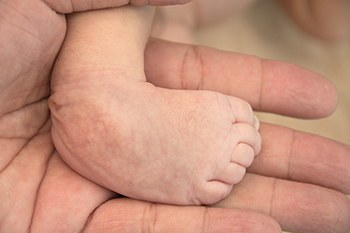
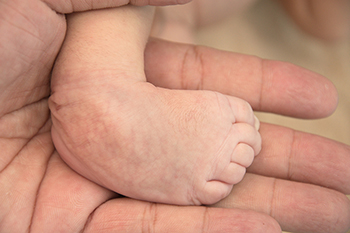
Congenital foot problems can affect a child’s mobility and overall foot function, often requiring medical evaluation and regular care. Clubfoot, also known as talipes equinovarus, is a common condition where the foot and ankle twist inward, often requiring casting or surgery. Metatarsus adductus involves the foot turning inward, sometimes limiting joint flexibility and requiring corrective measures if it does not improve naturally. Another congenital foot condition, metatarsus varus, causes the foot’s arch to rise and the sole to turn inward, frequently needing treatment with a cast to improve alignment. Talipes calcaneovalgus occurs when the foot bends backward with the heel turned outward, and early intervention with braces or a cast is often successful in correcting this. Each of these conditions can affect a child’s ability to walk or develop properly. A podiatrist can assess the severity of the congenital foot condition, recommend appropriate treatments, and provide ongoing care to support healthy foot development. If your child has a congenital foot problem, it is suggested that you schedule an appointment with a podiatrist for treatment.

Congenital foot problems require immediate attention to avoid future complications. If you have any concerns, contact one of our podiatrists of Foot & Ankle Doctors, Inc. . our doctors can provide the care you need to keep you pain-free and on your feet.

Congenital foot problems are deformities affecting the feet, toes, and/or ankles that children are born with. Some of these conditions have a genetic cause while others just happen. Some specific foot ailments that children may be born with include clubfeet, polydactyly/macrodactyly, and cleft foot. There are several other foot anomalies that can occur congenitally. What all of these conditions have in common is that a child may experience difficulty walking or performing everyday activities, as well as trouble finding footwear that fits their foot deformity. Some of these conditions are more serious than others. Consulting with a podiatrist as early as possible will help in properly diagnosing a child’s foot condition while getting the necessary treatment underway.

What are Causes of Congenital Foot Problem?

A congenital foot problem is one that happens to a child at birth. These conditions can be caused by a genetic predisposition, developmental or positional abnormalities during gestation, or with no known cause.

What are Symptoms of Congenital Foot Problems?

Symptoms vary by the congenital condition. Symptoms may consist of the following:

  • Clubfoot, where tendons are shortened, bones are shaped differently, and the Achilles tendon is tight, causing the foot to point in and down. It is also possible for the soles of the feet to face each other.
  • Polydactyly, which usually consists of a nubbin or small lump of tissue without a bone, a toe that is partially formed but has no joints, or an extra toe.
  • Vertical talus, where the talus bone forms in the wrong position causing other bones in the foot to line up improperly, the front of the foot to point up, and the bottom of the foot to stiffen, with no arch, and to curve out.
  • Tarsal coalition, when there is an abnormal connection of two or more bones in the foot leading to severe, rigid flatfoot.
  • Cleft foot, where there are missing toes, a V-shaped cleft, and other anatomical differences.
  • Macrodactyly, when the toes are abnormally large due to overgrowth of the underlying bone or soft tissue.

Treatment and Prevention

While there is nothing one can do to prevent congenital foot problems, raising awareness and receiving neonatal screenings are important. Early detection by taking your child to a podiatrist leads to the best outcome possible.

If you have any questions, please feel free to contact our offices located in Beverly Hills, Encino, Los Angeles, Los Alamitos, Pasadena, and Rolling Hills Estates CA . We offer the newest diagnostic and treatment technologies for all your foot care needs.

Read more about Congenital Foot Problems

What Is a Lisfranc Injury?

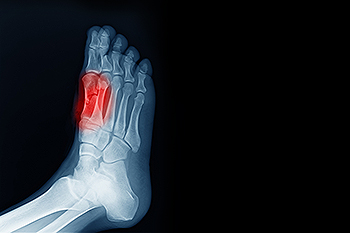
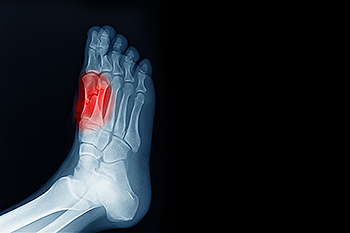
A Lisfranc injury refers to damage to bones in the midfoot, specifically the joint complex where the bones of the foot meet. This type of injury often occurs from a traumatic event, such as a car accident, sports injury, or a fall from height, where excessive force is applied to the foot. It can also happen in lower-impact scenarios, like twisting the foot awkwardly while walking or running. Symptoms of a Lisfranc injury include pain, swelling, bruising, and difficulty bearing weight on the affected foot. In severe cases, there may be visible deformity. Treatment depends on the severity of the injury. Minor injuries may be treated with immobilization, while more severe cases may require surgery to realign the bones and stabilize the joint. A podiatrist can accurately diagnose a Lisfranc injury through a physical exam and imaging, and develop a treatment plan to help restore function and alleviate pain. If you suspect a Lisfranc injury, it is suggested that you schedule an appointment with a podiatrist for the right care.

Foot Pain

Foot pain can be extremely painful and debilitating. If you have a foot pain, consult with one of our podiatrists  from Foot & Ankle Doctors, Inc. . our doctors will assess your condition and provide you with quality foot and ankle treatment.

Causes

Foot pain is a very broad condition that could be caused by one or more ailments. The most common include:

  • Bunions
  • Hammertoes
  • Plantar Fasciitis
  • Bone Spurs
  • Corns
  • Tarsal Tunnel Syndrome
  • Ingrown Toenails
  • Arthritis (such as Gout, Rheumatoid, and Osteoarthritis)
  • Flat Feet
  • Injury (from stress fractures, broken toe, foot, ankle, Achilles tendon ruptures, and sprains)
  • And more

Diagnosis

To figure out the cause of foot pain, podiatrists utilize several different methods. This can range from simple visual inspections and sensation tests to X-rays and MRI scans. Prior medical history, family medical history, and any recent physical traumatic events will all be taken into consideration for a proper diagnosis.

Treatment

Treatment depends upon the cause of the foot pain. Whether it is resting, staying off the foot, or having surgery; podiatrists have a number of treatment options available for foot pain.

If you have any questions, please feel free to contact our offices located in Beverly Hills, Encino, Los Angeles, Los Alamitos, Pasadena, and Rolling Hills Estates CA . We offer the newest diagnostic and treatment technologies for all your foot care needs.

Read more about Foot Pain

Podiatrists and the Foot Conditions They Treat

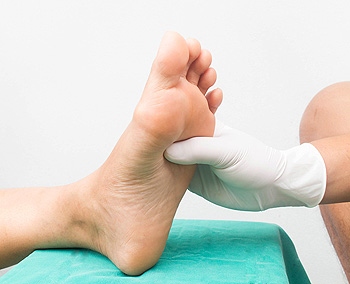
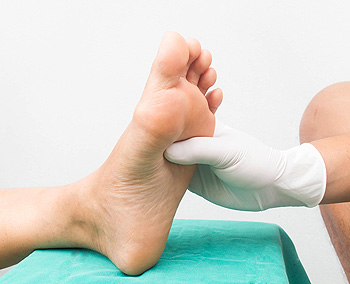
A podiatrist is a medical professional specializing in the diagnosis, treatment, and prevention of foot and ankle conditions. They treat a wide range of foot issues, from common ailments to more complex conditions. Gait analysis is one important service provided, where the podiatrist observes a patient’s walking pattern to identify abnormalities or issues that may cause pain or lead to injury. Podiatrists also perform procedures such as partial nail avulsion, a technique used to remove a portion of a toenail to treat painful ingrown nails. For warts or verrucas on the feet, swift verruca treatment is a popular option, using microwave technology to target and treat the infection. Additionally, podiatrists help manage conditions like flat feet and heel pain, offering solutions such as custom orthotics, stretching exercises, or lifestyle changes to improve foot health and alleviate discomfort. If you have any type of foot pain, it is suggested that you consult a podiatrist who can effectively treat various foot conditions.

If you are experiencing pain in the feet or ankles, don’t join the stubborn majority refusing treatment. Feel free to contact one of our podiatrists from Foot & Ankle Doctors, Inc. . our doctors can provide the care you need to keep you pain-free and on your feet.

What Is a Podiatrist?

Someone would seek the care of a podiatrist if they have suffered a foot injury or have common foot ailments such as heal spurs, bunions, arch problems, deformities, ingrown toenails, corns, foot and ankle problems, etc.

Podiatric Treatment

A podiatrist will treat the problematic areas of the feet, ankle or lower leg by prescribing the following:

  • Physical therapy
  • Drugs
  • Orthotic inserts or soles
  • Surgery on lower extremity fractures

A common podiatric procedure a podiatrist will use is a scanner or force plate which will allow the podiatrist to know the designs of orthotics. Patients are then told to follow a series of tasks to complete the treatment. The computer will scan the foot a see which areas show weight distribution and pressure points. The podiatrist will read the analysis and then determine which treatment plans are available.

If you have any questions, please feel free to contact our offices located in Beverly Hills, Encino, Los Angeles, Los Alamitos, Pasadena, and Rolling Hills Estates CA . We offer the newest diagnostic and treatment technologies for all your foot care needs.

Read more about What is a Podiatrist?

Make an Appointment Same Day Appointments Available

BOOK NOW